


The stakes look different. The standard doesn't.
If you've sat through a cleaning sales pitch lately, you've probably heard the words "smart," "AI" and "robotics" more than once. The industry is paying attention: half of the cleaning professionals CleanLink surveyed for 2026 said they plan to adopt IoT and smart sensor tools.
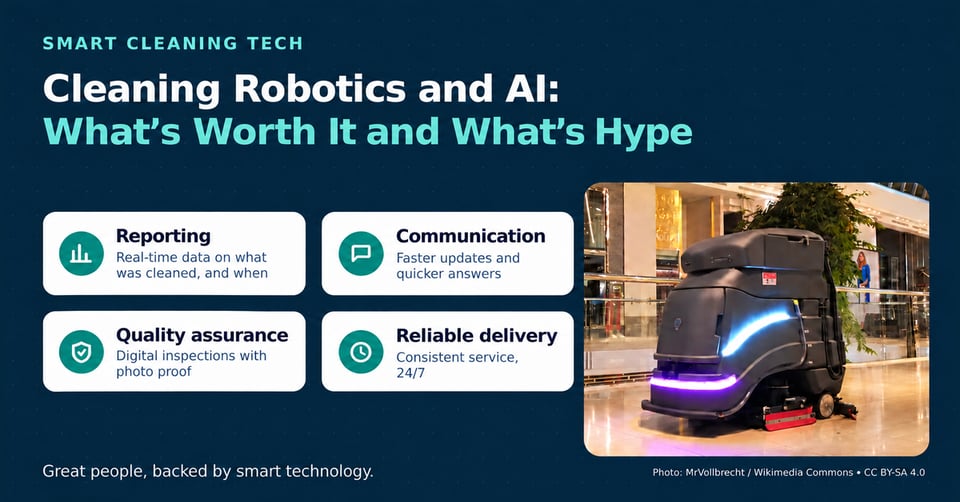
Technology doesn't clean a building on its own. People do. But the right robotics and AI tools make that work more visible, more consistent and easier to manage. The real question for a facility manager isn't "does my provider use smart tech?" It's "does their tech improve reporting, communication, quality and reliability in my building?"
Here's our take on what's worth it, what's mostly marketing, and how to tell the difference.
What "smart cleaning" actually means
"Smart cleaning" covers a handful of different tools. They vary a lot in cost and payoff.
AI reporting and communication tools
What it does: Log completed work, route requests and send status updates automatically.
Best fit: Nearly every building.
What to watch: These tools only matter if they make reports clearer and response times easier to track.
Digital inspection and QA apps
What it does: Log inspections, photos and issues with timestamps; flag repeat problems.
Best fit: Nearly every building.
What to watch: The value comes from consistent follow-through, not from more checklists alone.
Autonomous floor robots
What it does: Scrub or vacuum floors on a consistent, programmed schedule.
Best fit: Lobbies, corridors, open offices, retail, warehouses.
What to watch: They work best where the floorplan stays open and predictable.
Occupancy and foot-traffic sensors
What it does: Count how many people use a room, floor or restroom.
Best fit: Hybrid offices with uneven attendance.
What to watch: The data only matters if the cleaning plan changes because of it.
Restroom and dispenser sensors
What it does: Alert when soap, paper or towels run low, or traffic spikes.
Best fit: High-traffic restrooms, medical and public buildings.
What to watch: They help prevent complaints, but they do not replace inspection or quality checks.
Waste fill-level sensors
What it does: Show when bins are actually full.
Best fit: Large campuses, outdoor or common-area bins.
What to watch: Smaller buildings may get the same answer from a simple walk-through.
What's worth it
Reporting you don't have to chase. AI-powered tools log what was cleaned, where and when, and turn it into simple summaries. In medical and other critical environments, that record matters. One hospital study found that only about 43% of high-touch surfaces met the standard for thorough cleaning. Data that shows what was actually cleaned is the first step to closing that gap, and it gives you documentation for audits and inspections.
Communication that closes the loop. Empty soap or paper is one of the most common tenant complaints. Restroom alerts and digital request systems route issues to the team right away and confirm when they're fixed. Day and night shifts stay on the same page, and your team gets faster answers.
Quality assurance with proof. Timestamped inspections and photos give you a clear record of what was cleaned and when. AI can flag repeat issues, like a restroom that keeps falling short, so the fix happens before anyone complains.
Robotics for reliable delivery. Robotic scrubbers and vacuums handle large, repetitive floor work on a consistent schedule. That frees trained staff for detail work people do best, like disinfecting high-touch surfaces and restrooms. The result is the same standard, every visit.
What's mostly hype
Data nobody acts on. A dashboard full of charts means nothing if no one changes the cleaning plan because of it. Ask how the data changes what the crew does on a given night.
"Technology replaces people." Robots and AI support a cleaning team; they don't replace training, supervision and a trained eye. A sensor can tell you a restroom had 300 visits. It can't tell you yet whether the sink was wiped well.
Sensors everywhere. Putting a sensor in every room adds hardware, installation, Wi-Fi load and battery changes. Focus technology where it improves reporting, communication or quality, not where it just adds more data.
Tech as a stand-in for staffing. About 40% of the industry names labor shortages and budget pressure as major challenges. Technology can make a stable, well-trained crew more efficient. It can't fix high turnover or thin staffing.
Hidden costs. Watch for subscription fees, hardware you'll own when the contract ends, and IT or security reviews. Building systems connected to the internet are a growing security concern for facility teams, so ask who manages the devices.
6 questions to ask your cleaning provider
- What specific problem in my building will this technology solve?
- What reports will I receive, and how often?
- How do I submit a request, and how will I know when it's done?
- How do you inspect quality, and can I see the results over time?
- Where do you use robotics, and what does that free your team to focus on?
- If the tech went away tomorrow, what would stay the same about your service?
The last question matters most. A provider with strong training, consistent crews and regular inspections will do good work with or without technology. The right tech makes that work better and easier for you to see.
The bottom line
Smart cleaning tech is worth it when it improves what you can see and count on: clear reporting, fast communication, proven quality and consistent delivery. It's hype when it's sold as a replacement for good people and good processes.
At Office Pride, we start with the fundamentals: trained, consistent teams and regular quality inspections. Then we use technology to make reporting, communication and quality visible to you. Want to see what this could look like in your facility? Request a free cleaning assessment.